Plain-English summary#
Expenses are recorded in admin.foodops.io, not on the till. There are two everyday ways to record money going out:
- Expense Records - for a one-off or reimbursable expense you've already paid or are paying now (fuel, cleaning supplies, a staff reimbursement, a cash purchase). You pick who it was for, whether it is Paid now or Not paid yet and from which account, one or more expense-category lines with amounts and tax, and you can attach the receipt.
- Bills — for a supplier invoice you'll pay later. A bill stays owed until you record a Payment Made against it.
Both are in the Expenses area of the admin app. This is different from taking cash out of the register drawer during a shift (that's a cash withdrawal / pickup on the register session, not a business expense).
When you'd use this#
- Logging a cash purchase (fuel, gas cylinder, cleaning supplies) with the receipt attached
- Paying back a staff member for something they bought for the business
- Recording a supplier invoice as a Bill to pay at month-end
- Setting up a Recurring Bill for a fixed monthly cost (rent, subscription)
How to access#
- Sidebar: under Expenses - Expense Records, Bills, Payments Made, Recurring Bills, Supplier Credits (alongside Suppliers, Purchase Orders, Purchase Receives).
- You need permission to view expenses, and separate permission to create them.
Walkthrough — record a one-off expense#
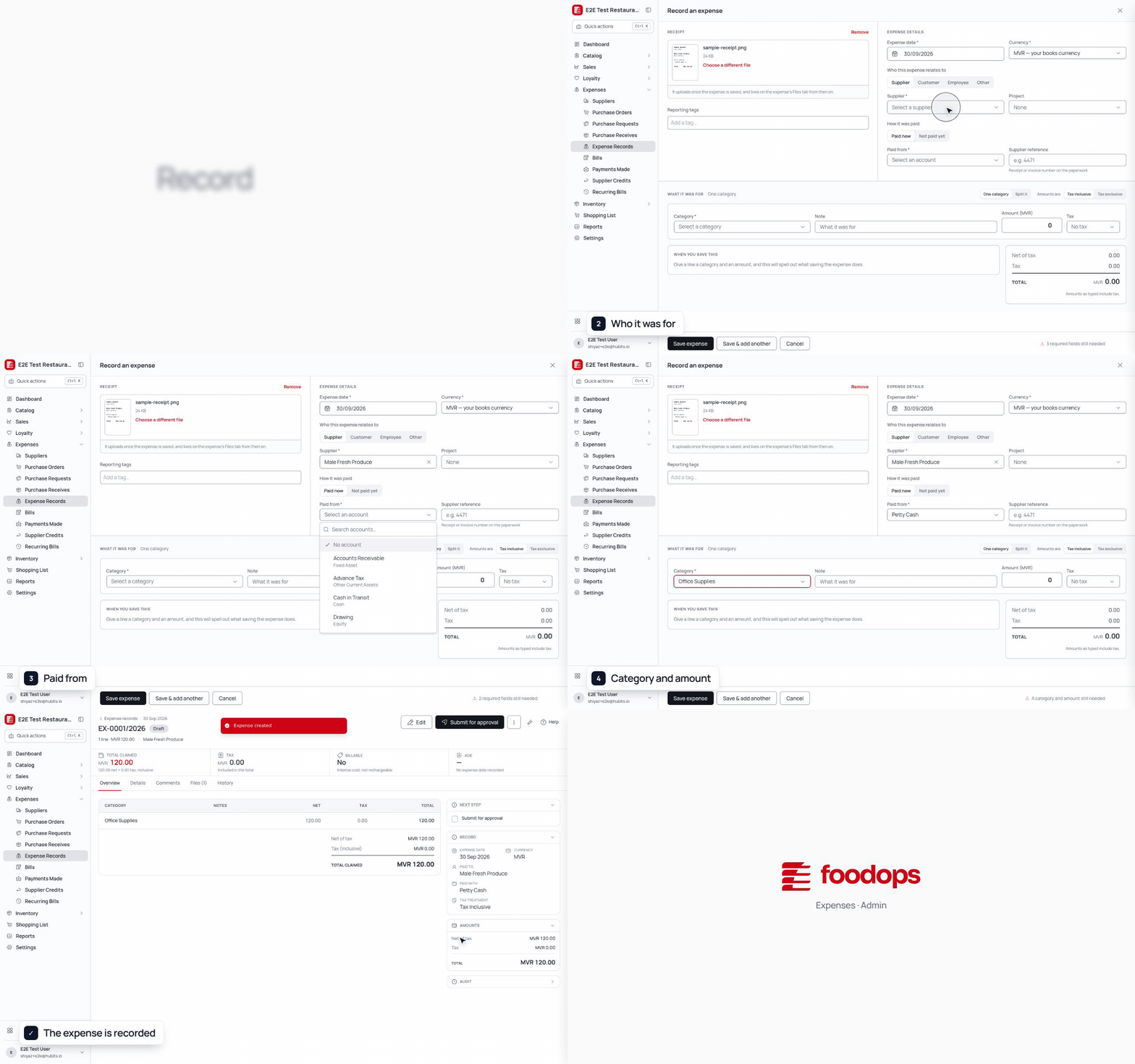
Open Expenses → Expense Records → New Expense.
- Expense date — the date of the expense. Required.
- Who this expense relates to - who the spend relates to: Supplier, Customer, Employee or Other. Pick Supplier for a vendor purchase, Employee for a staff reimbursement. If you choose Supplier, you must select one.
- How it was paid - choose Paid now or Not paid yet. Then pick the account (required): with Paid now it is the account the money came out of (Paid from, a bank or cash account from your chart of accounts). With Not paid yet the list changes to accounts for money you owe, such as payables or a credit card (Owed on), and the expense stays owing.
- Tax inclusive — whether the line amounts already include tax (default on). Changing it recalculates tax on every line.
- Add expense line(s) — each line has:
- Expense Category — the expense account the cost is recorded against. You need at least one line with a category and an amount.
- Description, Amount, Tax Type (a tax rate that sets the Tax Amount), and optional Notes.
- Totals add up as Sub-total, Tax total and Gross total.
- Attach the receipt — add the receipt image or PDF.
- Save. Depending on your setup, an expense can go through Draft → Pending Approval → Approved (or Rejected if declined). It can also be marked billable (To Be Billed) to charge on to a customer or project. "Submitted" isn't a separate step — it counts the same as Pending Approval.
The Expense Records list shows running totals (fiscal year, last 30 days, to be billed) and filters by status, supplier and date range.
Walkthrough — record a supplier bill (payable)#
For a supplier invoice you'll pay later, use Expenses → Bills → New instead of an Expense Record. A Bill records the supplier, line items and due date, and stays outstanding until you record a Payment Made against it. Bills can also be created from a Purchase Order (see Purchase Orders → "Create Bill"). For fixed repeating costs, a Recurring Bill creates the bill automatically on a schedule.
Key concepts#
- Expense Record - a one-off or reimbursable expense, either paid now from a bank or cash account or recorded as not paid yet. Can be paid now, or left owing with Not paid yet.
- Bill — a supplier invoice you owe and will pay later. Settled with Payments Made.
- How it was paid - Paid now takes the money from a bank or cash account (Paid from). Not paid yet records it against an account for money you owe (Owed on), so it stays owing.
- Expense Category — the expense account the cost is recorded in (e.g. Utilities, Repairs, Supplies). Feeds your P&L and expense reports.
- Billable / To Be Billed — an expense you plan to charge on to a customer or project instead of absorbing it.
- Tax inclusive - whether the amounts you type already include tax; when off, tax is added on top.
Common questions#
Q: How do I add an expense? A: Go to Expenses → Expense Records → New Expense in the admin app. Set the date, pick who it's for, choose Paid now or Not paid yet and the account, add one or more expense-category lines with amounts, attach the receipt, and Save.
Q: What's the difference between an Expense Record and a Bill? A: An Expense Record is usually something you've paid (or are paying now), coming straight out of a bank or cash account, though you can also record one as Not paid yet. A Bill is a supplier invoice you'll pay later; it stays owing until you record a Payment Made. Use Records for cash or immediate spend, Bills for "pay the supplier at month-end".
Q: Can I attach the receipt? A: Yes — attach the receipt image or PDF to the Expense Record, and to bills and other documents through their Files tab.
Q: Can I record a staff reimbursement? A: Yes - create an Expense Record with Who this expense relates to set to Employee and pick the staff member; choose Paid now and the account you paid them back from.
Q: Where do I see how much I've spent? A: The Expense Records list shows fiscal year, last 30 days and to be billed totals. To browse expense details, use the Expenses area. See Reports.